
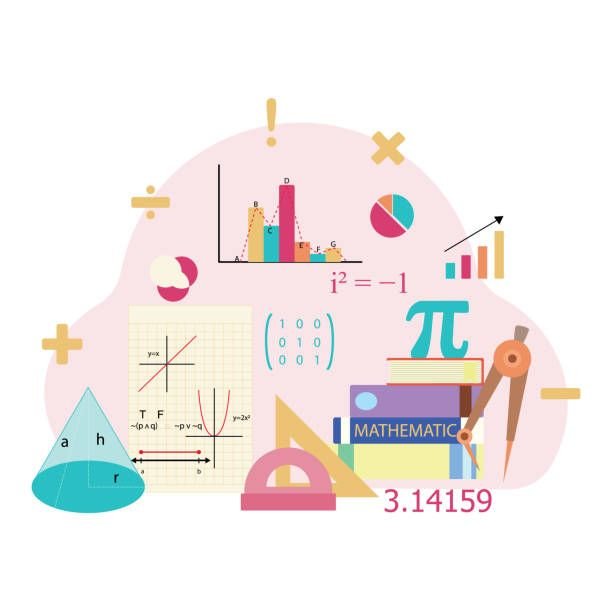
Many people think that maths exists only in textbooks and boring lessons with no practical use. In reality, maths is a part of nearly and quite literally everything we do; it’s a part of nature. Maths goes far beyond equations in textbooks.
From nature’s patterns to financial decisions, from architecture to technology, maths is everywhere—quietly shaping the way we live. Whether we realise it or not, we use mathematical thinking every day. From money to understanding technology, maths quietly supports daily life even outside of the classroom.
Budgeting and Finance
One of the most practical uses of maths is to do with money and managing money. Simple mathematics is a part of budgeting expenses, calculating savings, and even during shopping.
Even something as simple as splitting a restaurant bill or finding discount coupons involves division and percentages. Understanding basic maths is crucial for people to avoid debt and financial fraud. In short, financial stability begins with mathematical awareness.
Patterns in Nature
Nature is full of mathematical patterns that show how our world and surroundings function. From symmetry to patterns in nature, everything follows mathematical principles. For example, the famous Fibonacci sequence appears in plant growth and shell patterns. These natural designs show that maths isn’t just numbers; it is the language of nature. Recognising these patterns helps us appreciate how deeply mathematics is connected to life itself.
Architecture and Design
One of the most important practical uses of mathematics in the real world is in architecture. Buildings, bridges, and monuments are mathematical masterpieces.
Architects use geometry, ratios, and mathematical measurements to design safe structures. From ancient monuments to skyscrapers, every structure depends on accurate calculations. A failure in calculating the correct angles would result in unsafe architectural design.
Similarly, interior design relies on how symmetry, proportion, and balance function. Whether it’s arranging furniture or designing a space, maths ensures precision and safety.
Sports Statistics
Maths plays a major role in sports which may be hard to believe and it’s not always visible or appreciated. Analysing player performance requires math, so does predicting scores or comparing team rankings.
Math is used to analyze player and team performance through metrics like averages and percentages to identify strengths, weaknesses, and patterns for improvement. Coaches and analysts also use data from performance tracking to create personalized training programs and identify areas where athletes can develop their skills. By using data analysis many sport teams plan strategies and train accordingly.
Logic Behind Technology
Every piece of modern technology from mobile phones, apps, electrical devices to computers and machines operate on mathematical algorithms. Coding languages such as Python and Java use logic, patterns, and sequences, all rooted in mathematics. Even simple tasks like searching on Google or unlocking a phone involve calculations happening in seconds within the device.
Without mathematical thinking, technology simply wouldn’t function. Maths is not only about solving problems but also about powering inventions that shape our future.
Why Maths Truly Matters
Maths isn’t just an academic subject based on calculators and long sums; it is a life skill. It not only teaches logical thinking when solving problems but is also used in almost everything that exists.
Even people who claim maths is useless rely on it daily through simple tasks such as time management, measurements in cooking, or planning trips on budget. Once we recognise its presence around us, maths becomes less of a fear and more of a tool for empowerment.
So the next time someone asks, “Where will I use maths in real life anyway?”, the answer is simple: everywhere.